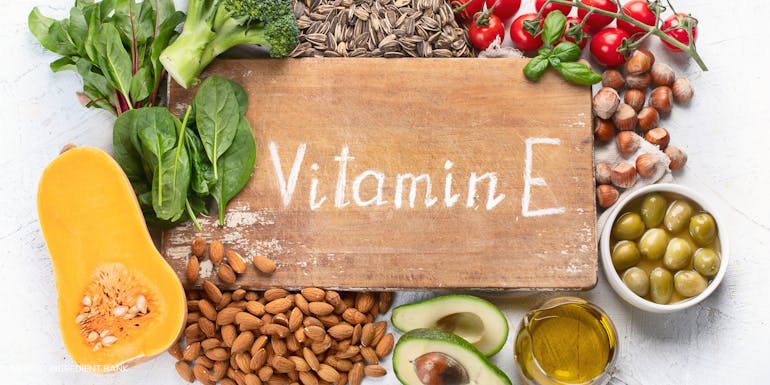
Vitamin E
Vitamin E is one of those nutrients most people recognise straight away. It shows up on supplement bottles, in multivitamins, and in skincare products - usually alongside claims about "antioxidants", "protection", or "skin repair".
Vitamin E is essential. Your body uses it to help protect cells from damage and to support normal immune function. But it’s also a nutrient where the gap between reputation and reality can be wide. For most people eating a varied diet, vitamin E supplements don’t offer clear extra health benefits. And high-dose products can cause problems for the wrong person, especially if you take medication that affects blood clotting.
This guide explains what vitamin E does, what people use it for, and how to make sensible choices about food, supplements, and topical products.
What is vitamin E?
Vitamin E isn’t a single ingredient. It’s a family of compounds, but the form the body mainly uses is alpha-tocopherol.
Vitamin E is also fat-soluble, which means:
- it’s absorbed best when eaten with fat
- the body can store it, rather than needing a steady daily intake in the way it does for some water-soluble vitamins
That’s one reason why deficiency is uncommon in otherwise healthy adults - and why "topping up" with high-dose supplements often isn’t necessary.
What does vitamin E actually do in the body?
The simplest way to think about vitamin E is as a nutrient that helps protect cells.
An antioxidant role (in plain English)
Your body naturally produces reactive molecules during normal metabolism. They can also increase due to things like smoking, air pollution, and UV exposure. In excess, these reactive molecules can contribute to "oxidative stress" - a process linked with cellular damage over time.
Vitamin E helps limit this damage, especially in the fatty parts of cell membranes. It’s positioned in the right place to act as a kind of "shield" for the fats that make up cell membranes. Vitamin C and other antioxidants can also work alongside vitamin E.
A role in immune function
Vitamin E also supports normal immune function. Research suggests that immune-related benefits from supplementation - where they appear - are more likely to be seen in certain groups (for example, some older adults), rather than in generally healthy younger adults with good overall nutrition.
A useful way to frame it is:
- Vitamin E is important to have enough of
- Taking more than you need is not the same as getting more benefit
Why do people take vitamin E?
People take vitamin E for lots of reasons. Some have reasonable evidence behind them; others are based more on marketing and tradition than outcomes seen in good-quality studies.
Skin health and appearance
This is the most common reason people reach for vitamin E.
Vitamin E is involved in protecting cells from oxidative stress, and skin is exposed to oxidative stress every day (sunlight, pollution, inflammation). That’s why vitamin E appears in many moisturisers and "barrier repair" products.
Where vitamin E is most defensible is dryness and barrier support. It can help improve moisture retention and support the feel of dry, rough skin.
Where the evidence is weaker is scar fading and dramatic "anti-ageing" claims. The idea that rubbing vitamin E oil onto scars makes them fade is popular, but clinical studies have generally not shown consistent improvement when vitamin E is used alone - and some people develop irritation or contact dermatitis.
Immune support
Vitamin E plays a role in normal immune function, and severe deficiency can impair the immune response.
However, in people who already have adequate intake, adding high-dose vitamin E doesn’t reliably translate into fewer infections or better "immunity" day to day. If immune support is your goal, the foundations (sleep, protein intake, overall diet quality, managing long-term conditions) tend to make a bigger difference than a single supplement.
Eye health (macular degeneration)
Vitamin E often gets mentioned in the context of age-related macular degeneration (AMD), but this is easy to oversimplify.
Evidence supports a specific combination supplement (the formula used in the Age-Related Eye Disease Studies) for certain people with intermediate AMD, helping reduce the risk of progression to advanced disease. That doesn’t mean vitamin E on its own prevents AMD or improves eyesight. The benefit appears to come from the combination, used in a specific clinical context.
Heart health
Vitamin E has been studied extensively for cardiovascular disease. Observational research sometimes shows that people with higher vitamin E intake from food have better heart outcomes. But large clinical trials of vitamin E supplements in broad populations have generally not shown the expected benefit.
A simple way to interpret that: a diet that contains vitamin-E-rich foods can be part of a heart-healthy pattern. High-dose supplements don’t reliably recreate the same effect - and in some contexts may increase risk.
"General wellbeing"
Many people take vitamin E as part of a broader "just in case" supplement routine. The issue is that, for most healthy adults, there’s little evidence that extra vitamin E improves energy, mood, or long-term outcomes. If you’re not deficient, the ceiling for benefit is low - while the ceiling for risk rises as doses climb.
Vitamin E for skin: supplements vs topical products
If you’re thinking about vitamin E mainly for skin, it’s worth separating what you swallow from what you apply.
Oral supplements
Oral vitamin E may make sense when there’s a clear reason: diagnosed deficiency, fat malabsorption, or clinician advice.
There is research linking lower vitamin E levels with certain inflammatory skin conditions. But low levels don’t automatically mean supplementation will help everyone, and the most reliable improvements in conditions like eczema usually come from proven approaches: regular emollient use, trigger management, and appropriate medicated treatments when needed.
If you’re taking vitamin E orally for skin alone, it’s wise to keep expectations realistic - and avoid high doses.
Topical products
Topical vitamin E is most likely to be helpful for:
- dry skin and a compromised skin barrier
- supportive antioxidant care as part of a moisturiser
It’s less reliable for:
- scar treatment (results are inconsistent and irritation is possible)
- major anti-ageing claims
If you’ve had reactions to fragranced products or essential oils, patch testing a new vitamin E product is sensible, especially if it’s a concentrated oil.


Food sources of vitamin E
Most people can meet their needs through food. Vitamin E is found mainly in foods that contain fats and oils.
Good everyday sources include:
- vegetable oils (sunflower and rapeseed are common examples)
- nuts and seeds (almonds and sunflower seeds are particularly high)
- green vegetables (spinach and broccoli are helpful contributors)
- avocado
- some fortified foods (depending on the product)
If your diet includes a mix of oils, nuts/seeds, and vegetables, you’re likely getting enough without needing a supplement.
Do you need a vitamin E supplement?
For most people, no.
True vitamin E deficiency is uncommon and usually linked to fat malabsorption - where the body can’t absorb fat-soluble vitamins properly. This can happen in certain long-term digestive conditions, pancreatic disorders, or after some forms of bariatric surgery.
Supplementation is most appropriate when there’s a clear reason, such as:
- a diagnosed deficiency
- a condition affecting fat absorption
- specialist advice to use a specific eye-health formulation (for AMD)
- clinician supervision in certain medical contexts
If you’re generally well and eating a varied diet, supplements are unlikely to add much.
How much is safe?
Vitamin E supplements range from modest doses to very high-dose products. This is where caution matters, because "high dose" is not the same as "high benefit".
Two practical points are most important:
More is not better
Once you’re meeting your needs, taking much more doesn’t reliably improve outcomes. In supplement studies, benefits are often small, inconsistent, or limited to specific groups - while risks become more relevant at higher doses.
High-dose vitamin E can increase bleeding risk
Vitamin E can affect clotting pathways. In higher doses, it may increase bleeding risk - particularly in people who take medication that also affects clotting.
That doesn’t mean vitamin E is "dangerous" in food. It means concentrated supplements should be chosen thoughtfully, especially if you’re on regular medication.
If you’re selecting a supplement without a specific medical reason, a lower or moderate dose is generally more sensible than a high-dose product.
When to be cautious (and when to check first)
Side effects from vitamin E in food are not the concern. The caution is mainly about supplements, particularly higher-dose ones.
It’s worth checking before taking a vitamin E supplement if any of these apply:
- you take blood thinners (for example, warfarin)
- you take regular antiplatelet medication (for example, aspirin or clopidogrel)
- you bruise easily, have a bleeding disorder, or you’re due to have surgery
- you’re taking medicines where interactions may matter (for example, some immunosuppressants or cancer treatments)
- you’re pregnant or breastfeeding and considering supplementing beyond what’s in a standard prenatal vitamin
Pregnancy deserves a specific mention: large reviews have not found convincing benefits from routine vitamin E supplementation during pregnancy, and some outcomes may be worse in supplement groups. Food sources are generally the safest way to meet your needs unless you’ve been advised otherwise.
Choosing a vitamin E supplement (if you actually need one)
If supplementation is appropriate for you, keep it simple.
Look for:
- a sensible dose (avoid very high-dose products unless advised)
- clear labelling (commonly "alpha-tocopherol")
- a reputable manufacturer with good quality control
You may see discussion online about "natural" vs "synthetic" vitamin E. In practice, for most people, the bigger issue is:
- whether a supplement is needed at all
- whether the dose is appropriate
- whether it’s safe alongside your medications
Pharmacist comment
"Vitamin E is essential, but it’s one of the nutrients people often take ‘just in case’ rather than because there’s a clear need. For most people, a varied diet provides enough.
Where we do need to be careful is with high-dose supplements. Vitamin E can increase bleeding risk, particularly if you take blood-thinning medicines or you’re preparing for surgery. If you’re unsure whether it’s suitable for you, speak to a pharmacist or GP before starting."
-Alessandro Grenci, Superintendent Pharmacist
Final thoughts
Vitamin E has important roles in protecting cells and supporting immune function, and it can be helpful in skincare products aimed at dryness and barrier support.
But most people don’t need a vitamin E supplement. When supplements are used, the key questions are whether there’s a clear reason for taking one and whether the dose is appropriate - because high-dose vitamin E can cause problems for the wrong person, particularly around bleeding risk and medication interactions.
If you’re considering vitamin E and you take regular medication, checking first is a simple step that can prevent avoidable risk.
Sources
- BMJ – Effects of vitamin E on stroke subtypes: meta-analysis of randomised controlled trials
- Cochrane Library – Vitamin E supplementation in pregnancy
- EFSA Journal – Tolerable upper intake level for vitamin E
- MedlinePlus – Vitamin E
- NHS – Vitamin E
- NIH Office of Dietary Supplements – Vitamin E Fact Sheet for Health Professionals
- National Eye Institute – Age-Related Eye Disease Studies (AREDS/AREDS2)
- PubMed – Topical vitamin E and scar outcomes
- PubMed – Vitamin E and immune function
- UK Government – Scientific Advisory Committee on Nutrition (SACN) reports
