Accord Dispersible Aspirin 75mg 28 Tablets
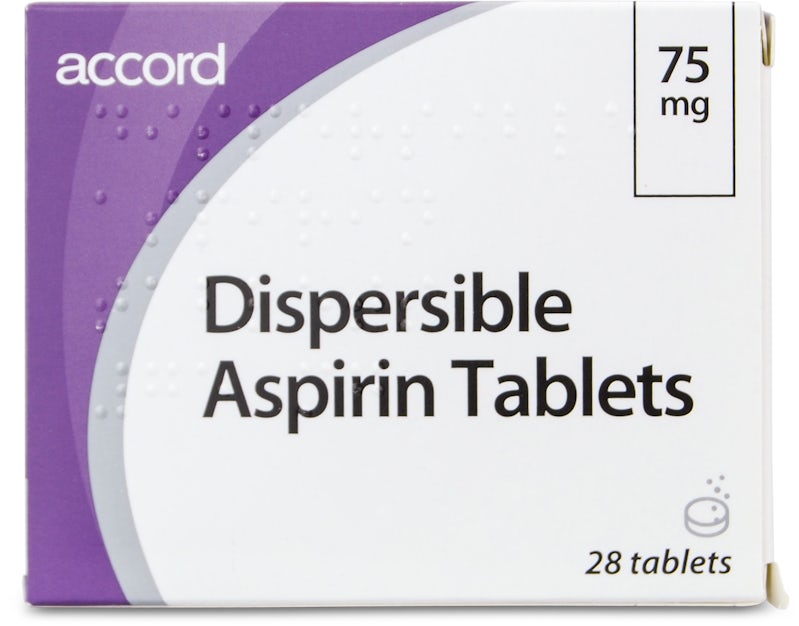
Accord Dispersible Aspirin 75mg 28 Tablets
All sizes
What 500,000+ customers say about medino:
Description
Accord Dispersible Aspirin 75mg 28 Tablets is a low-dose aspirin used under medical supervision to help reduce the risk of blood clots in people with cardiovascular conditions such as a previous heart attack, certain types of ischaemic stroke or transient ischaemic attack (TIA), or angina. It makes platelets less likely to clump, supporting long-term heart and circulation health in adults who have been advised to take daily aspirin for secondary prevention. The tablets disperse in water, offering a convenient option for those who prefer or need an easily swallowed form while still receiving the same low-dose antiplatelet effect. People with a history of aspirin allergy, stomach ulcers, bleeding problems, severe kidney or liver disease, or those who are pregnant or breastfeeding should discuss alternatives with a healthcare professional before using low-dose aspirin.
Key Features
- Low-dose antiplatelet support: Contains 75mg aspirin per tablet, widely used to help reduce the chance of future heart attacks and certain ischaemic strokes in people with existing cardiovascular disease, as advised by their doctor.
- Dispersible tablet format: Designed to be dispersed in water before swallowing, which can be helpful if you struggle with standard tablets or prefer a drinkable dose.
- Suitable for long-term regimens: Intended for ongoing daily use when prescribed or recommended, fitting smoothly into a long-term cardiovascular prevention plan overseen by your healthcare team.
- Recognised mechanism of action: Works by reducing platelet aggregation, making the blood less sticky and lowering the likelihood of harmful clots forming in narrowed arteries.
- Clear safety guidance: Comes with a patient information leaflet highlighting who should not take aspirin, key warnings such as use in pregnancy (especially the third trimester) and children under 16, and when to seek medical advice about side effects or interactions.
Who is Accord Dispersible Aspirin 75mg 28 Tablets intended for?
This low-dose aspirin is generally intended for adults who have been advised by their doctor to take daily aspirin to help prevent further cardiovascular events, such as heart attack or certain types of ischaemic stroke. It is not usually used as a general painkiller at this dose and should only be started or continued on medical advice tailored to your personal risk profile.
How does this low-dose aspirin help my heart and circulation?
The aspirin in these dispersible tablets helps stop platelets from sticking together so easily, which in turn reduces the risk of clots that can block arteries in the heart or brain. Low-dose aspirin is commonly used for secondary prevention in people with conditions like angina, previous heart attack, ischaemic stroke or TIA, or after stent or bypass procedures, when recommended by a clinician.
What side effects or risks should I be aware of?
Commonly discussed risks with aspirin include indigestion, irritation of the stomach lining and a higher chance of bleeding, which can occasionally be serious, for example black stools or vomiting blood. People with a history of ulcers, bleeding disorders, asthma triggered by aspirin or other NSAIDs, severe kidney or liver problems, or those in the third trimester of pregnancy need careful medical assessment before taking low-dose aspirin.
Can everyone take Accord Dispersible Aspirin 75mg?
No, this product is not suitable for everyone, including children under 16 unless specifically prescribed by a doctor, individuals allergic to aspirin or other NSAIDs, and many people with active stomach ulcers or certain bleeding or clotting problems. Anyone who is pregnant, breastfeeding, has chronic illnesses, or takes other medicines that affect clotting or the stomach should speak with a doctor or pharmacist to check if low-dose aspirin is appropriate.
How does this compare with standard aspirin painkillers?
Dispersible low-dose aspirin 75mg is formulated and used primarily for cardiovascular protection, not for short-term pain relief, which usually requires higher doses such as 300–900mg. While both forms contain aspirin as the active ingredient, low-dose regimens focus on long-term platelet inhibition and clot prevention under supervision, rather than day-to-day treatment of headaches or other minor pains.
Ingredients
Active Ingredients: Each tablet contains Aspirin 75mg.
Inactive ingredients: Starch, sodium saccharin, lactose, citricacid, calcium carbonate, talc and sodium lauryl salphate.
Usage and Instructions
For the management of cardiovascular or cerebrovascular disease:
Patients should seek the advice of a doctor before commencing therapy for the first time.
The usual dosage, for long-term use, is 75-150mg once daily. In some circumstances a higher dose may be appropriate, especially in the short term, and up to 300mg a day may be used on the advice of a doctor.
In general, acetylsalicylic acids should be used with caution in elderly patients who are more prone to adverse events. The usual adult dose is recommended in the absence of severe renal or hepatic insufficiency (see sections 4.3 and 4.4). Treatment should be reviewed at regular intervals.
Antithrombotic action:
150mg at diagnosis and 75mg daily thereafter. Tablets taken at diagnosis should be chewed in order to gain rapid absorption.
Children:
Do not give to children aged under 16 years, unless specifically indicated (e.g. for Kawasaki's disease). See section 4.4.
Method of administration:
Aspirin 75mg is for oral administration to adults only.
Take the tablet with water, do not cut, chew or crush the tablet. Swallow whole.
Warnings
Do not give this medicine to children under the age of 16 unless your doctor tells you. This is because there is a possible association between Aspirin and Reye's Syndrome when given to children. Reye's syndrome is a very rare disease, which can be fatal.
Before starting long term use of aspirin you must consult your doctor who will discuss the benefits and risks of this therapy with you. Inform your doctor about the medicines you are taking.
If you are using aspirin regularly seek advice of your doctor before taking any other medicine (including other medicines that you have bought).
Do not take Aspirin 75mg Dispersible Tablets if you:
Are allergic to Aspirin, NSAIDs which includes those when in attacks of asthma, angioedema, uticaria or rhinitis have been precipitated by aspirin or any other NSAID or any of the other ingredients.
Suffer from gout or had in the past.
Have a stomach ulcer or have had problems with ulcers in the past.
Suffer from haemophilia or any other bleeding condition.
Are taking blood thinning (anti-coagulant) medication.
Are in the last 3 months of pregnancy or are breastfeeding.
Take special care and tell your doctor before taking Aspirin 75mg Dispersible Tablets if you:
Have liver or kidney disease.
Have asthma or have ever had it in the past.
Are suffering from dehydration (feeling constantly thirsty).
Are intolerant to some sugars as these tablets contain lactose.
Have been told you are deficient in glucose-6-phosphate dehydrogenase.
Tell your doctor or pharmacist before taking Aspirin 75mg Dispersible Tablets if you are already taking any of the following medicines, as their effectiveness may be influenced by aspirin if they are taken at the same time:
Metoclopramide (for sickness and digestive disorders).
Blood thinning medicines such as Heparin, Warfarin or nicoumalone.
Corticosteroids e.g. hydrocortisone (which can be used for arthritis, asthma and inflammatory conditions).
Anti-inflammatory medicines or steroids for pain and inflammation e.g. ibuprofen.
High blood pressure medicines e.g diuretic/water tablets, Angio-ll receptor antagonists or ACE inhibitors.
Epilepsy medicines e.g. Phenytoin, Sodium valproate.
Methotrexate (for psoriasis, arthritis or tumours).
Antacids for indigestion.
Probenecid or sulphinpyrazone for gout.
Anti depressants e.g. citalopram.
Ask your doctor or pharmacist for advice before taking Dispersible Aspirin 75mg Tablets:
If you are pregnant or breastfeeding. Aspirin should not be taken in the last three months of pregnancy. Do not take this medicine if you are breastfeeding.
Side Effects
Aspirin is generally well-tolerated and most people don't experience side effects. The most common side effects are related to stomach irritation and include abdominal pain, indigestion and nausea. These can mainly be avoided by taking the aspirin with food.
Side effects like ulcers or bleeding in the stomach or intestine are more likely in elderly people and those who've had peptic ulcers in the past. The risk can also be increased by taking certain other medicines.
If your doctor thinks you are at high risk of side effects on the gut you will be prescribed an extra medicine to help protect your gut.
Other possible aspirin side effects include:
- Increased time taken to stop bleeding or other bleeding problems (see below).
- Sensation of ringing, or other noise in the ears (tinnitus).
- Confusion.
- Allergic reactions such as skin rash, swelling of the lips, tongue and throat (angioedema) or narrowing of the airways (bronchospasm or asthma attack - see below).